 It
It  En
En 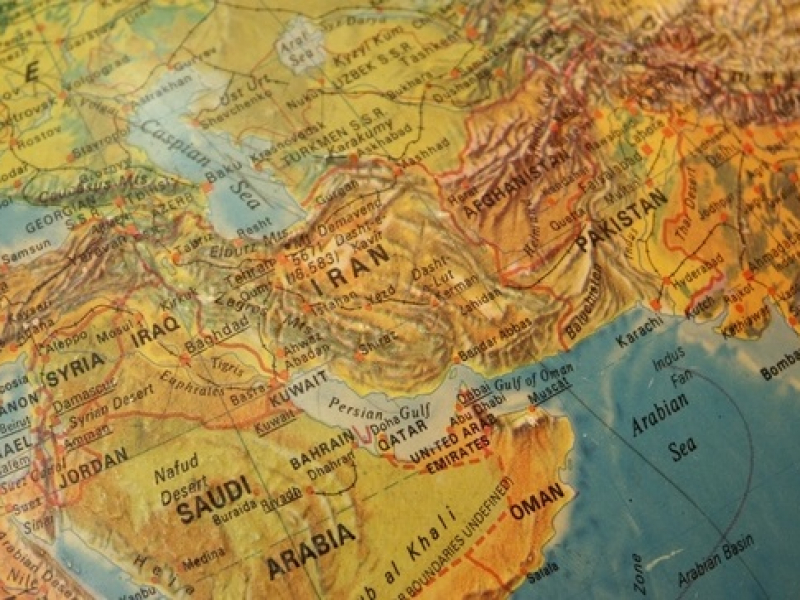
Commentary no. 038 NS/2026
The US-Israel war against Iran has profoundly undermined the economic and strategic premises upon which the Arab Gulf states built their successful development model in recent decades. With growing fervor, Gulf economies pursued diversification, global connectivity, and investment-led growth under the implicit assumption that regional instability could be on the whole contained and that the vital maritime arteries linking the Gulf to global markets would remain open. The unprecedented disruption of traffic through the Strait of Hormuz this year has demonstrated the limits of this approach.
Whatever the terms of a settlement with Tehran, the central lesson of the conflict is unlikely to disappear. The vulnerability of the Strait of Hormuz will remain a structural feature of the regional landscape. Even if shipping flows return to pre-war levels and a ceasefire endures, Gulf policymakers now face a reality they had long feared but had hoped to avoid: Iran possesses enduring leverage over one of the world's most critical economic chokepoints. The question is no longer if Iran can close the Strait, but how effectively it just did so—wresting control of the strategic waterway while withstanding a massive, yet not decisive, US-Israeli bombing campaign. The possibility of recurrence will remain embedded in investor calculations, insurance premiums, strategic planning, and regional diplomacy.
Yet an equally remarkable aspect of the crisis has been the response of the Gulf States. Despite being hit in many ways harder than Israel itself by Teheran’s military retaliation, Gulf countries have shown considerable restraint, patience, and resilience. Rather than overreacting to attacks aimed at both military and civilian sites, including critical infrastructure and data centers, they have focused on protecting their populations and their economic interests while avoiding a widening of the war. Their contained response reflects not disorientation but strategic calculation. These are states that are well too aware of the irreparable damage that would be inflicted to the Arab Gulf and the larger MENA if the conflict escalated into a full-blown regional conflagration.
The Gulf's resilience is not theoretical. The Gulf states have spent years preparing for both economic and security shocks. Just a few years ago, during the COVID-19 pandemic, Gulf economies weathered one of the most severe disruptions to global travel, trade, and energy demand in modern history. Back then, they were able to overcome the challenge, protecting strategic sectors and accelerating diversification reforms. The current crisis is different in nature and much more serious in that the Arab Gulf has come under military attack and the regional security equation has been altered for good. The adaptive capacities that enabled Gulf States to emerge stronger from the pandemic need to be mobilized again, but on a much larger scale and this time sustained indefinitely - at least for as long as Tehran's leadership will continue to keep the region hostage to the regime’s self-preservation strategy.
The End of Tranquility. For all their individual differences, the economic transformation strategies pursued by Saudi Arabia, the United Arab Emirates, Qatar, Bahrain, Kuwait, and Oman were built around a vision of the Gulf as a stable hub connecting Europe, Asia, and Africa. Logistics corridors, tourism, financial services, advanced manufacturing, and technology ecosystems all depended on predictable connectivity.
The Strait of Hormuz remains central to that vision. Approximately one-fifth of global petroleum consumption and around one-quarter of globally traded seaborne oil transit through the Strait, making it one of the world's most important economic chokepoints. Even countries that have invested in bypass infrastructure possess only limited alternatives. Saudi Arabia and the UAE have developed crucial pipeline networks capable of circumventing part of Hormuz traffic, but these alternatives cannot fully replace the waterway's capacity.
The conflict has exposed the strategic fragility inherent in this geography. The issue extends beyond energy exports. Liquefied natural gas shipments, container traffic, industrial supply chains, insurance markets, and investor confidence are all affected when Hormuz becomes contested.
The broader implication is that tranquility – to the extent that this corner of the world had enjoyed some in recent years relative to the Levant and North Africa - can no longer be assumed as the foundation of Gulf prosperity. Make no mistake: regional stability may return, but strategic uncertainty is likely to persist. Gulf States must therefore adapt not to a temporary crisis but to a more permanent condition of geopolitical volatility.
Strategic Autonomy. A second lesson emerging from the conflict concerns security. The Gulf states continue to regard the United States as an indispensable security partner - and correctly so. American military capabilities, intelligence assets, and force projection remain unmatched. The conflict has reinforced rather than diminished the importance of the US security umbrella.
At the same time, Gulf leaders have experienced first hand the limits of this model and increasingly recognize that the United States cannot solve all of their security challenges. As a matter of fact, Washington's military interventions have often generated unintended consequences, while American strategic attention will increasingly be divided between multiple theatres. The logical response is not distancing from the United States but strategic diversification.
Across the Gulf, efforts to strengthen indigenous military capabilities are accelerating together with the search for new partnerships. In this regard, the United Arab Emirates enters the new strategic environment with some edge. While all Gulf states have invested considerably in military capacity, Abu Dhabi has invested more than others in defence modernization, procuring advanced air defence systems, cyber capabilities, unmanned systems, as well as boosting domestic defence production while also pursuing the broadest array of international manufacturing partnerships (including with countries such as France to South Korea). Crucially, Emirati firms have transitioned from just buying foreign weapons to actively exporting indigenous defense-industrial expertise globally.
The objective should be a more balanced security equation in which Gulf States become stronger contributors to their own defence while maintaining robust partnerships with the USA as well as a range of other partners.
Managing China, Expanding India, Reengaging Europe. The conflict has indeed underscored the importance of diversified partnerships. China remains an essential economic partner for the Gulf. As a leading energy importer and a central actor in global manufacturing and trade, Beijing will remain indispensable to Gulf economic strategies. Moreover, China's influence is likely to expand significantly over the coming years, the largely ineffective US-Israel war against Iran contributing to further altering global strategic balances in Beijing’s favour. Continued engagement with China is therefore not optional.
However, Gulf policymakers are equally aware of the risks associated with excessive dependence on any single external power, let alone one that has cultivated close ties with the Iranian regime. While American interventions can create complications, an overly close alignment with China could generate systemic vulnerabilities of a different kind, including structural technological dependency and the progressive reduction of economic and strategic options.
In fact, for middle powers whose prosperity depends on maintaining diversified relationships, excessive reliance on either Washington or Beijing would undermine the very autonomy they seek to preserve. This is why relations with India and Europe have acquired growing importance.
India's economic rise, demographic dynamism, technological capabilities, and geographic position make it a natural strategic partner for the Gulf. Simultaneously, Europe remains a critical market, investment partner, technology provider, and could become a useful diplomatic actor in the new circumstances. Stronger Gulf-India-Europe linkages therefore represent not merely an economic opportunity but a geopolitical asset, even more so in the wake of the Iran war.
The Strategic Value of the Indo-Mediterranean. It is within this context that the concept of the Indo-Mediterranean deserves renewed attention. Projects such as the India-Middle East-Europe Economic Corridor (IMEC), announced in 2023 in a different international context, were initially understood primarily through a geo-economic lens. Their value was measured in terms of trade facilitation, global connectivity, digital infrastructure, energy networks, and supply-chain efficiency.
The current crisis demonstrates that such a perspective is incomplete. Although the war has complicated IMEC's implementation in the short term, it has simultaneously strengthened its strategic rationale. The corridor should increasingly be understood as a networked geopolitical project designed to enhance resilience across a vast space stretching from India to Europe through the Middle East. The strategic logic is straightforward.
First, enhanced connectivity reduces the ability of any single actor to hold regional economic development hostage through chokepoint disruption. Second, stronger Indo-Mediterranean networks can help diversify security dependencies and reduce excessive reliance on any one external guarantor. Third, they provide not only a geo-economic alternative to China-led Belt and Road Initiative but, if expanded, also a geostrategic response to the China-Russia-Iran military axis and to US-China military technology dominance.
The Indo-Mediterranean framework should therefore evolve beyond infrastructure and trade. It requires much more emphasis on technological and security cooperation. Indeed, Europe, India, the Gulf states, and regional partners should explore mechanisms that integrate security and economic planning rather than treating them as separate domains. And while high-end military weapons systems will continue to largely procured from the usual providers, new defense-industrial partnerships should be actively pursued wherever they promise to bring concrete added value. What Ukraine has been able to already offer Gulf states in the crucial domain of drone technology should be replicated in other fields too, involving the more dynamic European, Gulf, and Indian companies in the fields of military and dual use technology.
A New European Approach to the Gulf. Europe also faces its own strategic adjustment, including a more transactional transatlantic relationship and the need to increasingly take care of its own defense on a European continent that is no longer at peace. When it comes to the Guld, European policymakers have generally viewed the region primarily through the lenses of energy security, sovereign wealth investment, and financial opportunity. Such an approach increasingly appears insufficient.
The Gulf should be treated not as a coffer but as a genuine strategic partner. This requires a more sophisticated understanding of the region. The Gulf states are not interchangeable actors. Each possesses its own history, strategic culture, economic model, diplomatic tradition, and national ambition. Saudi Arabia's agenda differs from the UAE's and while broadly aligned on the Iranian threat the two countries do not see eye to eye when it comes to regional strategy, as their tense bilateral relationship as shown of late. For their part, Kuwait and Bahrain have suffered more than others the spillovers of the Iran war and will have to come up with unique responses. Qatar's diplomatic profile and long-standing engagement with Iran adds to the complexity of the Arab Gulf, as does Oman's mediation tradition and recent stance on the future management of the Strait of Hormuz.
European policy must therefore combine support for Gulf regional cooperation - which at this time of distress is more important than ever - with stronger bilateral partnerships tailored to national priorities and specific conditons.
Partnership – not Sympathy. The Gulf states are understandably bruised by what has occurred. The conflict has challenged assumptions that shaped decades of economic planning and exposed vulnerabilities that can no longer be ignored. The Strait of Hormuz will remain a source of strategic anxiety even if the guns fall silent. Yet the story is defined equally by vulnerability and resilience.
Across the Gulf, governments have responded with discipline and strategic composure. What the Gulf requires now is not sympathy but ambitious partnerships equal to the scale of the challenge. Europe, India have an opportunity to help build a more resilient Indo-Mediterranean order - one that enhances connectivity, strengthens security, diversifies dependencies, and increases strategic agency in an increasingly competitive world.
The objective is not the construction of a new bloc. Rather, it is the creation of a resilient and interconnected economic space capable of navigating an increasingly fragmented and conflict-prone international system. Despite its unintended consequences, the Iran crisis has illuminated the advantages of a selective and more strategic approach to connectivity. This opens up an immediate and compelling opportunity for like-minded Indo-Mediterranean actors.
*Board of Directors Fondazione CSF