 It
It  En
En 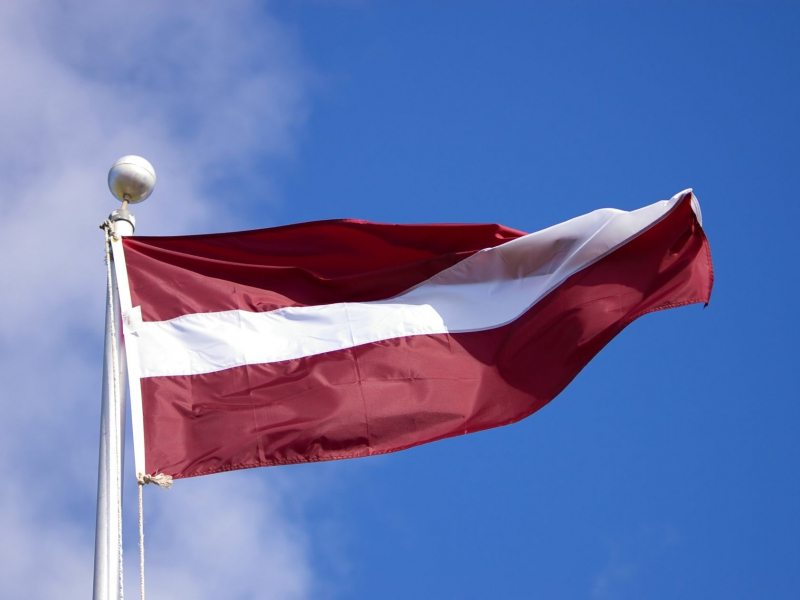
Commentary no. 41 NS/2026
The visit to Moldova by thirty-two mayors and representatives of local and regional authorities from Latvia provides a significant opportunity to reflect on the relationship between local public administration reform, territorial development and the process of European integration. The meeting, held in the framework of an exchange of experience between Moldova and the Association of Regional Development Centres and Regions of Latvia, highlights a central issue for all countries engaged in processes of institutional modernisation: the quality of local governance is a decisive condition for the state’s ability to promote development, cohesion and democratic participation. Moldova is currently at a crucial stage in its European path. Moving closer to the European Union does not concern only legal alignment or the adoption of administrative standards; it also entails a profound transformation of the country’s institutional capacity. In this context, the reform of local public administration represents one of the most delicate steps. It directly affects the relationship between the central state, territories and citizens, and has an impact on the ability to provide efficient public services, attract investment, use available resources effectively and prepare for access to European funds.
Latvia’s experience is particularly relevant for Moldova because it stems from a historical and institutional context that presents certain similarities with the Moldovan one. Latvia, like the other Baltic states, underwent after 1991 a complex process of state reconstruction, economic transformation, administrative reorganisation and integration into Euro-Atlantic institutions. Within this process, local government reform played an important role. The two main phases of administrative reorganisation, in 2009 and 2020, aimed to overcome territorial fragmentation, which had made it difficult to guarantee quality services and to build sufficiently strong local administrations.
The figure mentioned during the meeting, according to which the average population of an administrative-territorial unit in Latvia is now approximately 41,000 inhabitants, indicates a clear choice: to strengthen the administrative scale of local authorities in order to make them more capable of managing responsibilities, designing public policies and accessing European funding. Of course, territorial size is not in itself a guarantee of good governance. However, local authorities that are too small, with limited human and financial resources, risk being unable to perform their functions effectively, especially in a context in which access to European funds requires planning capacity, technical skills and administrative continuity. From this perspective, the comparison between Latvia and Moldova raises a classic issue in the debate on federalism and multilevel governance: how can democratic proximity and administrative efficiency be reconciled? Local institutions must remain close to citizens, respond to community needs and preserve democratic participation. At the same time, however, they must have an adequate scale to provide services, plan territorial development and manage complex resources. An effective administrative reform therefore cannot be limited to redrawing municipal boundaries; it must build a balance between representation, institutional capacity and financial sustainability.
Moldova is addressing this challenge through the process of voluntary amalgamation of municipalities. This is a politically sensitive choice, because any territorial reorganisation affects local identities, political balances and citizens’ perception of institutional proximity. Nevertheless, the declared objective of the reform is to create stronger local administrations, capable of providing better services and participating more effectively in development programmes. The reference to the hundreds of decisions already adopted shows that the process is under way and that there is a political will to move towards a greater rationalisation of the local administrative system.
The central point, however, is that amalgamation must not be understood as an end in itself. The merger of municipalities can generate benefits only if it is accompanied by a real strengthening of administrative capacities. This means investing in the training of local staff, the digitalisation of services, strategic planning, the ability to prepare European projects and cooperation between levels of government. Without these elements, the risk is that the reform will simply result in a reduction in the number of local authorities, without substantially improving the quality of administration. Latvia’s experience shows instead that stronger local authorities can become central actors in regional development. The capacity to absorb European funds, build infrastructure, improve services and transport, and support local economic development depends largely on the quality of territorial administrations. EU cohesion policy, in fact, does not operate only through decisions taken at the central level; it requires strong territorial involvement. Regions, municipalities and local communities are often the places where European strategies become concrete policies and visible results. For Moldova, this lesson is particularly important. The process of European integration cannot be conceived as an exclusively diplomatic or legislative path. EU accession requires the construction of capable institutions at all levels. In other words, Europe must be “administered” locally. Reforms, investments and European programmes produce concrete effects only if there are territorial administrations able to interpret them, adapt them to local needs and implement them in a transparent and effective manner.
The strengthening of Moldovan municipalities can become an instrument of Europeanisation from below. The experience of the Baltic countries demonstrates that European integration can accelerate processes of administrative modernisation, but also that such processes require strong internal coordination capacity. Multilevel governance is not merely an institutional formula: it is a daily practice of cooperation between central government, local authorities, civil society and economic actors. Without this coordination, even the best strategies risk remaining on paper.
The dialogue with Latvia also has broader political significance. It strengthens cooperation between two countries that share a historical memory marked by the Soviet experience and that have sought, in different forms and at different times, to redefine their place in the European space. Latvia, now a member state of the European Union, can offer Moldova not a model to be copied mechanically, but an experience to be critically adapted. Every administrative reform must in fact take into account the institutional history, geography, demographic structure and economic conditions of the country implementing it.
This case offers a particularly interesting point of reflection. The reform of local administration in Moldova does not concern only the efficiency of the state; it also touches on the broader issue of the distribution of power, democratic participation and the balance between centre and periphery. From a federalist perspective, the quality of local institutions is an essential element of multilevel democracy. A political system is all the stronger when it succeeds in combining the unity of the state, territorial autonomy and administrative capacity.
Cooperation between Latvia and Moldova also shows that European enlargement is not only a vertical process, led by EU institutions and national governments, but also a horizontal process, made up of exchanges between territories, local administrations and political communities that share experiences of transition. In this sense, networks between European local authorities can become valuable instruments of institutional learning. They make it possible to transfer practical knowledge, avoid mistakes already experienced elsewhere and build political solidarity between member states and candidate countries. If properly supported, the Moldovan reform can therefore help strengthen not only administrative efficiency but also the country’s democratic resilience. In a regional context marked by geopolitical tensions, economic vulnerabilities and external pressures, strong local administrations represent a fundamental safeguard of stability. They can strengthen citizens’ trust in institutions, improve the delivery of public services and make the link between the European path and the daily life of communities more concrete.
The success of the reform will depend on the ability to avoid two opposite risks. On the one hand, excessive fragmentation, which prevents local authorities from having the resources necessary to act. On the other, a centralisation disguised as rationalisation, which could weaken territorial representation and distance citizens from public decision-making. The challenge is to build local authorities that are stronger, but no less democratic; more efficient, but no less rooted in their communities. Latvia’s experience suggests that this balance is possible, but it requires time, investment and a clear institutional design. Administrative reform must be accompanied by both material and immaterial infrastructure: roads, transport, services and digital networks, but also skills, transparency, planning capacity and a culture of cooperation. Only in this way can the strengthening of local authorities become a lever for territorial development and European integration. The of Latvian representatives to Moldova confirms the importance of institutional cooperation between European countries and candidate countries. It shows that European construction does not pass only through treaties, negotiations and legislative reforms, but also through the daily work of local administrations. For Moldova, the strengthening of municipalities represents an essential condition for transforming the objective of European integration into concrete results. For the European Union, supporting this process means investing in the stability, cohesion and democratic quality of its eastern neighbourhood.
The Moldovan-Latvian case therefore recalls a central lesson of federalism: Europe is built not only from above, but also from below; not only in national and supranational decision-making centres, but in territories, towns and local communities. It is precisely there that European integration becomes visible, measurable and socially meaningful.
*Junior Visiting Fellow Fondazione CSF